



For generations, the cornerstone of American wealth accumulation has been residential real estate. During periods of economic uncertainty, investors have traditionally flocked to property, operating under the assumption that brick-and-mortar assets provide an impenetrable shield against inflation. However, the unique macroeconomic conditions of 2026—characterized by punitively high mortgage rates, soaring construction costs, and localized supply gluts—have violently shattered this illusion. The residential real estate market is currently failing the inflation test, leaving millions of Americans dangerously overexposed to an illiquid, depreciating asset class.21
Homebuilders Slashing Prices
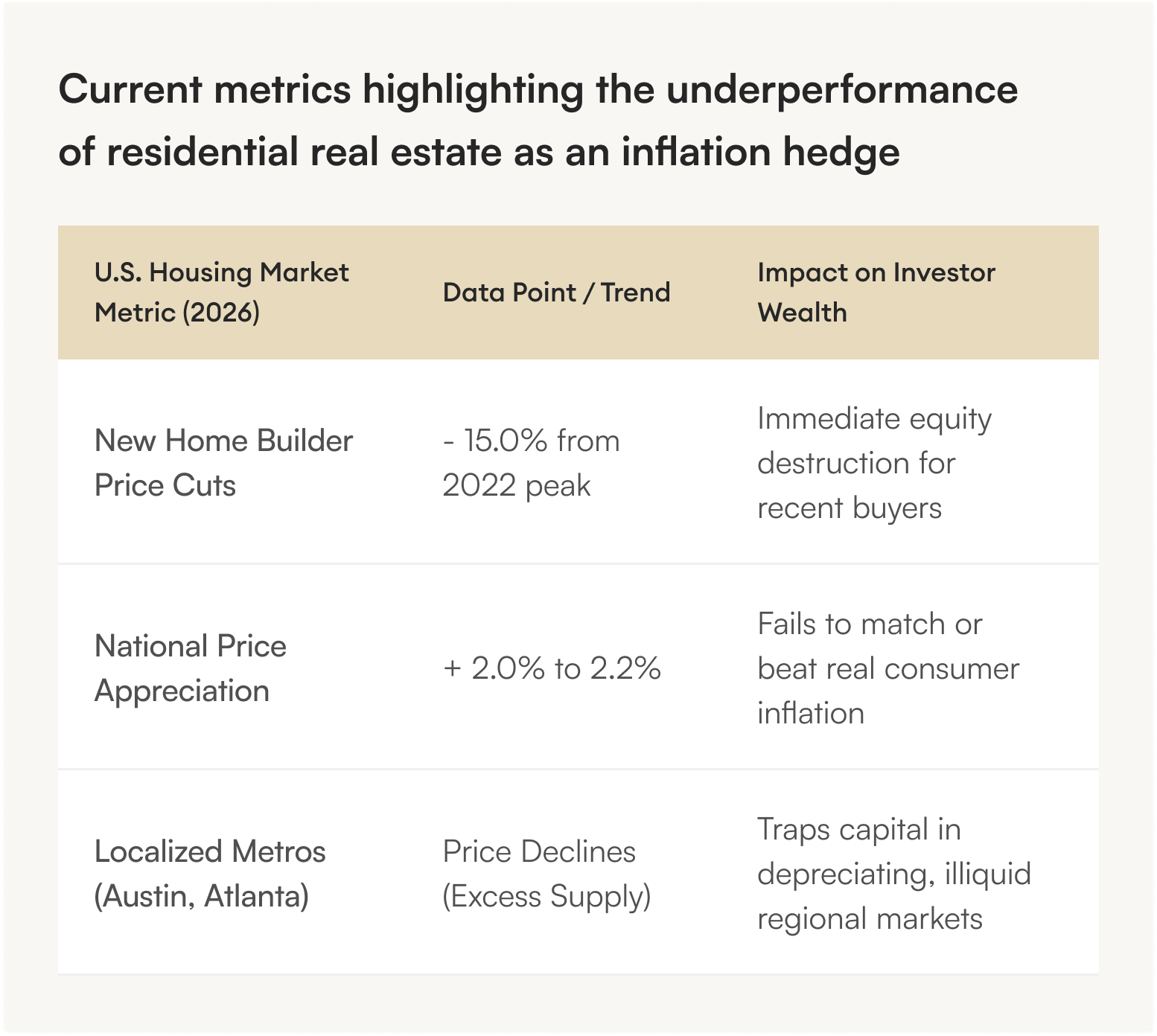
The distress in the housing market is most clearly evidenced by the aggressive capitulation of major U.S. homebuilders. Faced with a paralyzed secondary market and severely constrained buyer affordability, builders are currently engaging in desperate price wars just to move inventory.40 U.S. Census Bureau data reveals that homebuilders have slashed prices by nearly 15% from their 2022 peaks in an attempt to attract buyers.40 Furthermore, to mask the true decline in property values, builders are taking massive margin hits to offer subsidized, sub-5% mortgage rate buydowns.40
The Negative Real Return of Housing
Despite these extreme incentives, the broader market continues to languish. Nationally, home prices are projected to rise by a meager 2% to 2.2% in 2026, a rate that completely fails to outpace the real rate of inflation.21 When accounting for soaring property taxes, exorbitant insurance premiums, and maintenance costs, the real return on residential real estate is deeply negative. Furthermore, formerly booming metropolitan markets such as Austin, Nashville, Atlanta, and Phoenix are currently facing localized price declines due to massive excess supply and collapsing demand.21
Tying up the majority of your net worth in an illiquid asset during a stagflationary crisis is a tremendous risk. Property cannot be sold fractionally to cover sudden expenses, and its value is entirely dependent on the willingness of a bank to issue a mortgage to a buyer at current interest rates.
Real Estate vs. Liquid Gold
In stark contrast, physical gold and silver provide the exact economic protection that real estate is currently failing to deliver. Gold prices are currently hovering near record highs, driven by massive safe-haven buying as investors seek true protection from inflation and geopolitical tensions.21 Unlike property, precious metals carry absolutely zero ongoing property tax burdens, require no maintenance, and offer immense fractional liquidity—allowing you to convert exact portions of your wealth into currency whenever required.
Modern investment strategies must evolve away from outdated paradigms. Relying on an overvalued housing market to protect your purchasing power in 2026 guarantees a reduction in your standard of living. By proactively reallocating a portion of your capital into physical gold and silver with Merchant Gold Group, you secure a highly liquid, proven stabilizing counterweight. Contact our specialists today to learn how we can help you integrate tangible precious metals into your wealth preservation strategy, ensuring your financial freedom is not trapped in a depreciating housing market.




