


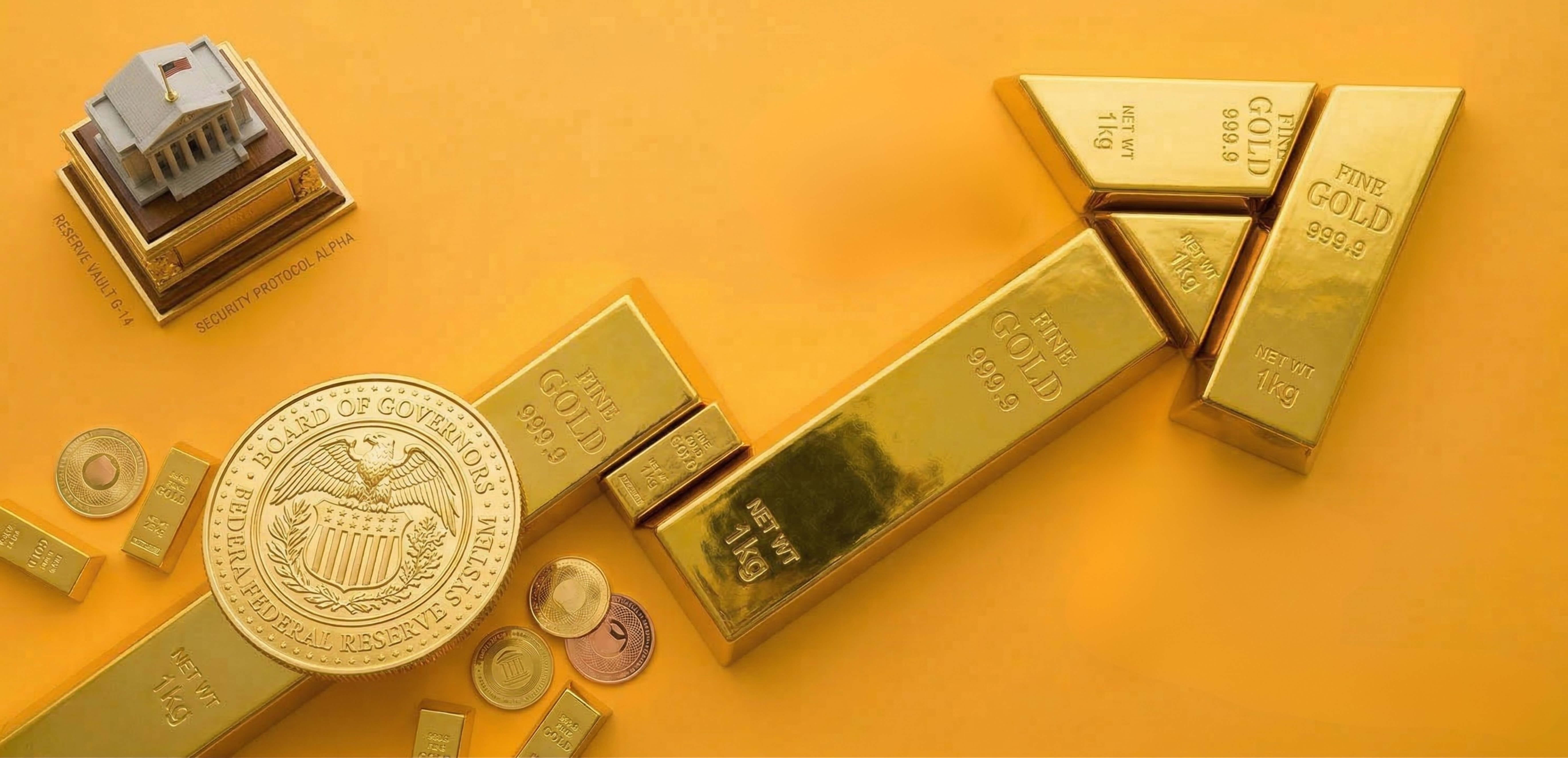
When assessing the long-term viability of an investment, individual investors are well-advised to track the silent movements of the "smart money." In 2026, the architects of global finance—sovereign central banks—are currently executing the most aggressive wealth rotation in modern economic history. Amidst surging sovereign debt, deep geopolitical fracturing, and rampant inflationary pressures, central banks are abandoning fiat currency instruments and accumulating physical gold at an utterly staggering pace.
The Unprecedented 2026 Accumulation
This institutional behavior is not driven by short-term trading speculation; it is a profound, structural vote of no confidence in the sustainability of the global fiat system. According to strategic analysis from major institutions like J.P. Morgan, the velocity of this accumulation is paradigm-shifting. In the third quarter of 2025 alone, combined investor and central bank gold demand reached roughly 980 tonnes—a massive 50% acceleration above the average of the previous four quarters.
To grasp the magnitude of this movement, one must look at the notional value: this 980-tonne acquisition equates to approximately $109 billion flowing directly into physical precious metals in a single quarter.

The "Alternative Fiat" Supercycle
Why are the world's most powerful financial institutions hoarding tangible metal? Analysts at State Street Global Advisors (SSGA) note that gold is in the middle innings of a massive structural supercycle, driven by what is termed the "alternative fiat and global debasement trade". Global sectoral debt has rapidly eclipsed $340 trillion, with the government share of that debt reaching a record 30%. This extreme leverage practically guarantees the future debasement of fiat currency to service the interest, making gold an exceptionally attractive hedge against duration risk.
Furthermore, the traditional inverse correlation between stocks and bonds remains severely elevated; as both asset classes fall simultaneously under the weight of inflation, gold acts as the vital left-tail hedge for institutional portfolios. Finally, the escalating de-dollarization movement requires central banks to hold neutral, non-counterparty reserve assets to shield their economies from sanctions. Due to these unyielding structural forces, SSGA forecasts that gold will consolidate higher at $4,000–$4,500, with geopolitical tailwinds actively supporting a push toward the $5,000 per ounce threshold.
Mirror the Smart Money
If the most heavily capitalized, mathematically rigorous financial institutions on the planet are desperately converting their fiat reserves into physical gold to survive the volatility of 2026, it is imperative that retail investors ask if their own retirement accounts are similarly protected. Relying solely on vulnerable paper stocks and depreciating dollars is an immense risk that global monetary authorities are no longer willing to tolerate.
You can deploy the exact same defensive strategy as a central bank by utilizing a self-directed Precious Metals IRA. Merchant Gold Group provides a highly secure, transparent process to transition your vulnerable retirement funds into the absolute safety of physical gold and silver. Contact our IRA specialists today to align your personal wealth preservation strategy with the most powerful institutions in the world.




