


The gold mining sector is experiencing a historic profitability boom that most retirement investors have completely overlooked. According to S&P Global's 2026 Mine Cost Outlook released in February, global average all in sustaining costs for gold producers are projected to decline 5% in 2026 while gold prices are forecast to increase 24%. This creates record high operating margins of approximately $2,800 per ounce, the widest spread in gold mining history. With gold trading near $4,700 and industry AISC averaging around $1,600 to $1,800, top tier producers are generating cash at rates that make tech stocks look expensive by comparison.
.png)
The AISC Revolution
All in sustaining cost is the gold industry's comprehensive profitability metric, capturing every dollar required to keep a mine producing at current levels. Unlike older cash cost measures that excluded sustaining capital and corporate overhead, AISC includes mining, processing, administration, sustaining capital expenditures, exploration to replace reserves, environmental compliance, and mine closure provisions. When AISC is subtracted from the realized gold price, the result is operating margin per ounce. In 2026, that margin has exploded to historic levels as operational efficiencies drive costs down while geopolitical demand drives prices up.
.png)
Why Costs Are Falling
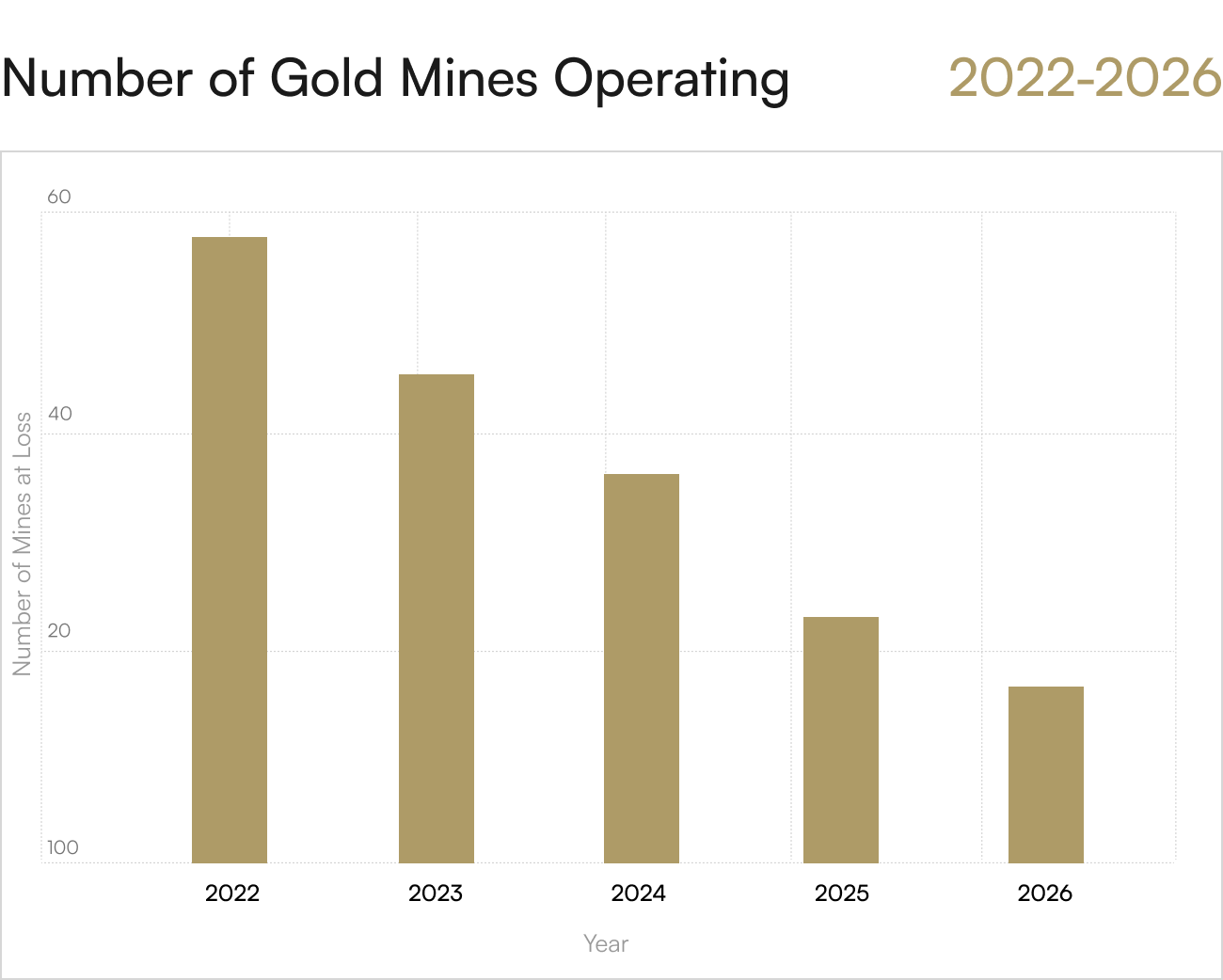
The decline in AISC is being driven by several factors. First, mining companies have become aggressively focused on operational efficiency, cutting costs and streamlining portfolios by divesting noncore assets. Second, byproduct credits from silver, copper, and other metals are improving under the coproduct costing method. Silver is forecast to average $40.92 per ounce in 2026, providing meaningful revenue offsets for polymetallic operations. Third, productivity gains from automation and digital mine management systems are reducing labor and energy costs per ounce. Fourth, the closure of high cost marginal mines over the past two years has improved the industry's aggregate cost profile.
Major Producers Capitalizing
Agnico Eagle Mines stands out with the lowest AISC among major producers at approximately $1,475 per ounce, giving it a margin exceeding $3,300 per ounce at April 2026 gold prices. Newmont, the world's largest gold producer, is projecting $9.5 billion in free cash flow despite designating 2026 as a production trough year. Barrick Gold trades at a forward price to earnings ratio of just 12.23 while offering a 3.5% to 4.0% dividend yield. These are not speculative juniors; these are Tier 1 producers with decades of reserve life generating cash flow that rivals the best performing sectors in the S&P 500.
Leveraged Upside for Investors
Gold mining stocks historically offer 2x to 3x leverage to gold prices, meaning a 10% move in gold often translates to a 20% to 30% move in mining equities. The VanEck Gold Miners ETF delivered a 108% return over the trailing year through April 8, 2026, outperforming the S&P 500 by more than 80 percentage points. Yet despite this extraordinary run, mining stocks remain historically cheap on a valuation basis. At current gold prices and AISC levels, producers are generating earnings multiples well below broader market averages while sitting on appreciating reserves and offering dividend yields that exceed the S&P 500.
Why This Matters for Retirement Investors
Retirement investors who feel they missed gold at $4,700 should look at the mining sector. With record $2,800 per ounce margins, producers are positioned to generate explosive earnings growth even if gold prices simply hold current levels. If gold advances toward the $5,400 to $6,000 targets set by Goldman Sachs and JPMorgan, mining stocks could deliver multiples of that return through operational leverage. Inside a self directed IRA, gold mining ETFs and individual producers offer a way to benefit from rising precious metals prices with the tax advantages of a retirement account. Merchant Gold Group can help you explore both physical gold holdings and mining equity exposure as complementary components of a diversified precious metals retirement strategy. Contact our specialists today to learn how declining costs and surging prices are creating the most profitable environment in gold mining history.




