


.jpg)
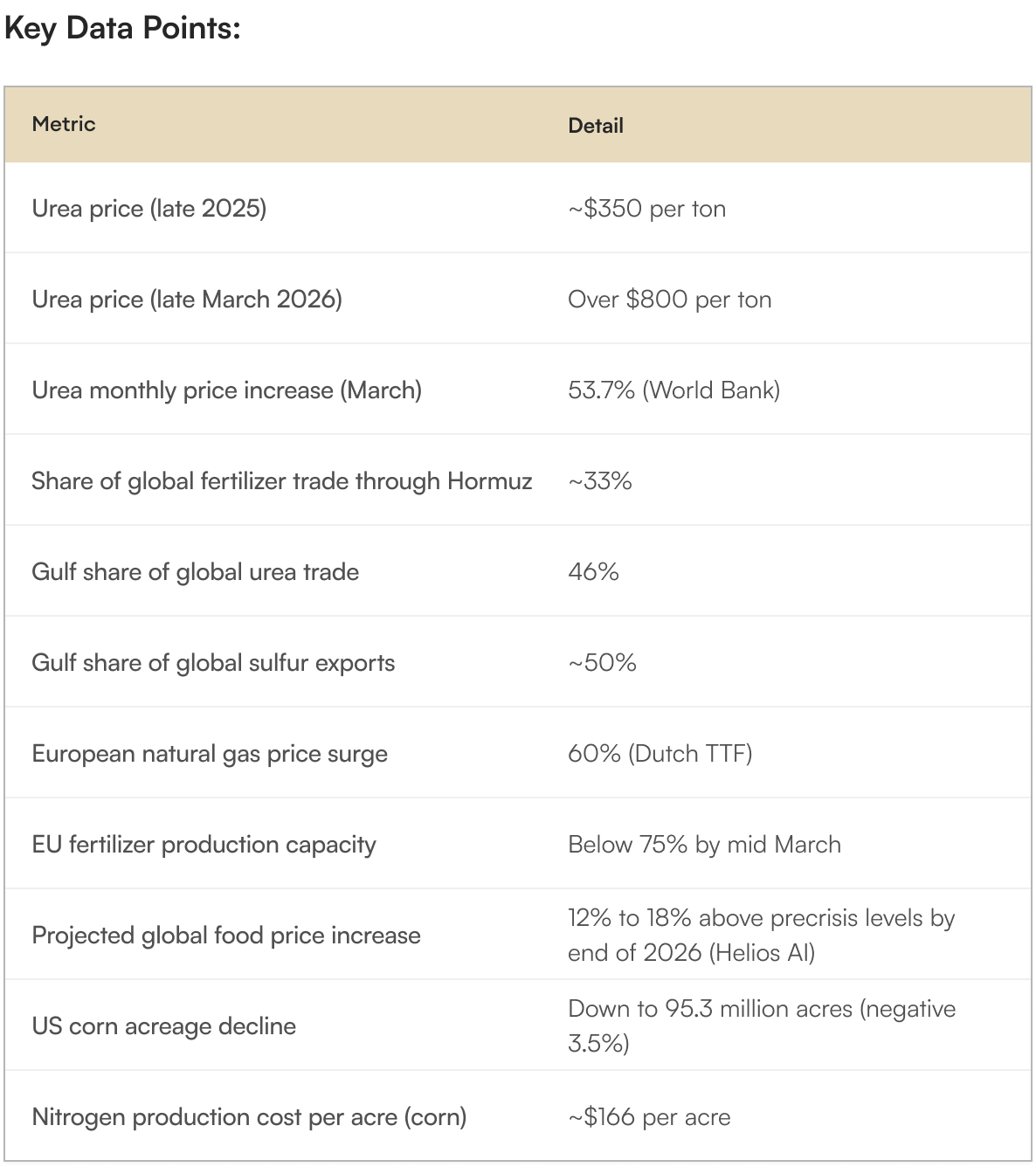
While oil prices dominate headlines, a fertilizer crisis of historic proportions is silently building. Urea prices have surged from approximately $350 per ton in late 2025 to over $800 per ton, more than doubling. The World Bank's April 2026 commodity report showed a 26.2% fertilizer price spike in a single month. Approximately one third of global seaborne fertilizer trade passes through the Strait of Hormuz, Cand Gulf countries produce 46% of global urea trade, roughly 20% of phosphate fertilizers, and approximately 25% of global sulfur. Unlike oil, no strategic fertilizer reserves exist anywhere in the world.
The "Soybean Pivot"
American farmers are abandoning corn in favor of soybeans because nitrogen fertilizer costs make corn cultivation unprofitable. US corn acreage intentions dropped 3.5% to 95.3 million acres. Deere and Co lowered 2026 net income guidance to $4.0 to $4.75 billion, citing a "prolonged trough."
Global Impact
India, Bangladesh, Pakistan, and Egypt have been forced to shut down fertilizer plants. Brazil, which imports approximately 85% of its fertilizer, faces severe shortages. Natural gas accounts for 70% to 90% of nitrogen fertilizer manufacturing costs, and European gas prices have surged 60%.
Direct Quotes:
- Noah Gordon, Carnegie Endowment: "A ship captain bold enough to brave drone strikes and dash through the Strait of Hormuz would prefer to carry oil than fertilizer."
- Francisco Martin Rayo, Helios AI co founder: "You can't put fertilizer in the ground in June that you missed putting in in March or April and expect the same result."
- IEA's Fatih Birol: "The current crisis is more than all previous crises put together... We are heading towards a major, major disruption, and the biggest in history."
- David Delaney, CEO of Itafos (April 6): Explored whether "the fertilizer crisis could become a food crisis soon."
What should we do?
Food inflation is the most politically destabilizing form of inflation. When bread prices rise, governments fall. The 2010 to 2011 Arab Spring began with wheat prices. Retirement investors who think the war's economic damage ends when oil stabilizes are ignoring the fertilizer time bomb. You cannot eat a stock certificate. But gold has preserved purchasing power through every famine, drought, and food crisis in recorded history. With global food prices projected to rise 12% to 18%, gold at $4,750 per ounce is not expensive; it is insurance against the most basic human need becoming unaffordable.




