


.jpg)
While global attention remains fixated on oil prices and military operations in the Persian Gulf, a far more dangerous crisis is building beneath the surface. The Strait of Hormuz blockade has trapped approximately 46% of global urea trade, 25% of global sulfur exports, and 20% of phosphate fertilizer shipments. Urea prices have surged from approximately $350 per ton in late 2025 to over $800 per ton in April 2026, more than doubling. The Carnegie Endowment for International Peace warns that unlike oil, no strategic fertilizer reserves exist anywhere in the world. When fertilizer runs out, food production collapses, and when food prices spike, governments fall.
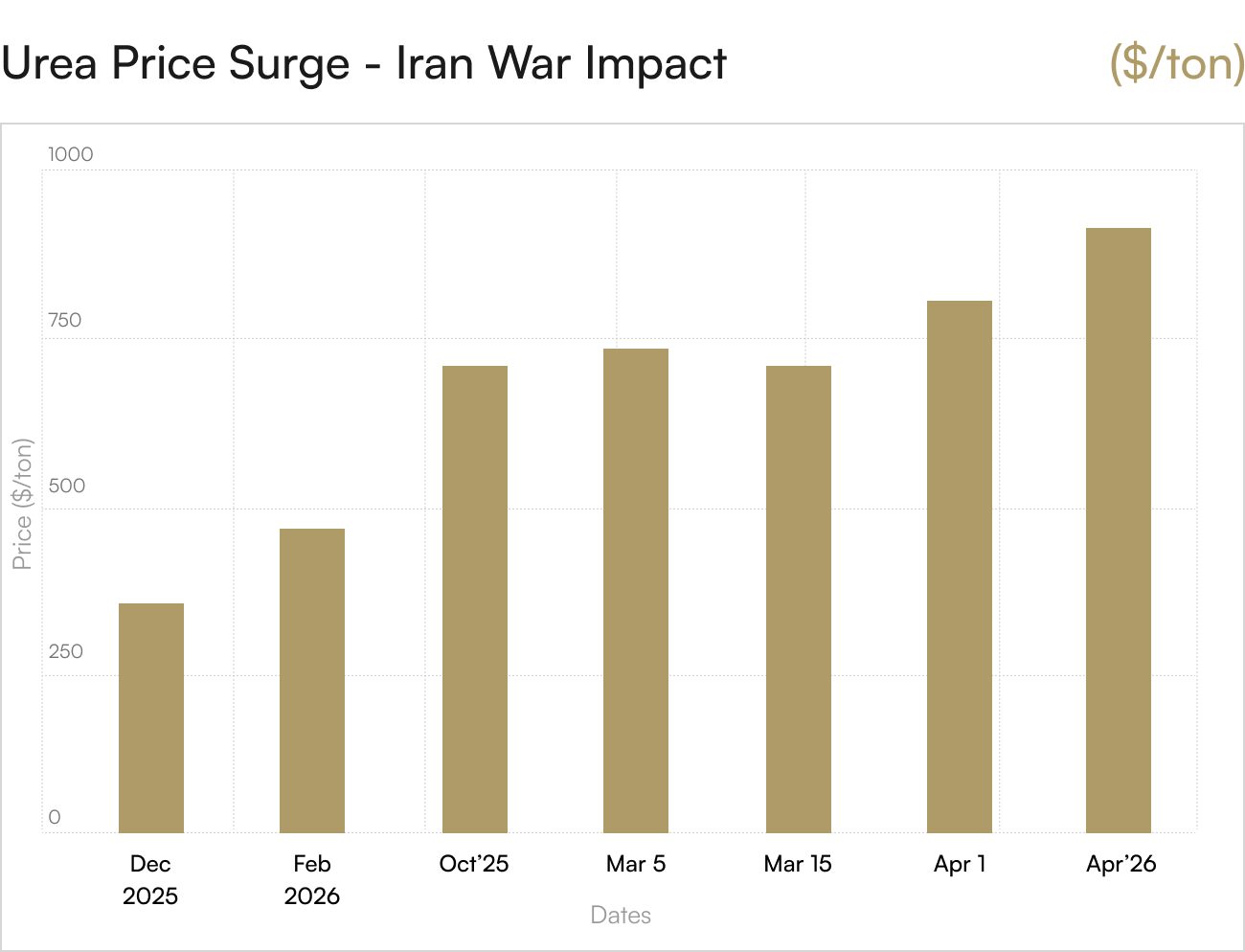
The Invisible Inflation Multiplier
The World Bank’s April 2026 commodity report documented a staggering 26.2% fertilizer price spike in a single month. European natural gas prices, which drive 70% to 90% of nitrogen fertilizer manufacturing costs, have surged 60%. EU fertilizer production capacity has dropped below 75%. Helios AI forecasts global food prices will rise 12% to 18% above pre crisis levels by the end of 2026. The Carnegie Endowment’s Noah Gordon observed that a ship captain bold enough to brave drone strikes through the Strait of Hormuz would prefer to carry oil than fertilizer, because oil commands higher prices per ton. Fertilizer is simply being left behind.
American Farmers Are Already Retreating
The crisis is already reshaping American agriculture. With nitrogen fertilizer costs reaching $166 per acre for corn, farmers are abandoning corn in favor of soybeans, which require far less fertilizer input. US corn acreage intentions dropped 3.5% to 95.3 million acres. Deere and Co. lowered its 2026 net income guidance to $4.0 to $4.75 billion, citing a prolonged trough. India, Bangladesh, Pakistan, and Egypt have been forced to shut down fertilizer plants entirely. Brazil, which imports approximately 85% of its fertilizer, faces severe shortages heading into its growing season.
.png)
You Cannot Eat a Stock Certificate
Food inflation is the most politically destabilizing and personally devastating form of inflation. When bread prices rise, savings evaporate, social contracts fracture, and governments topple. The 2010 to 2011 Arab Spring began with wheat prices. Every major revolution in human history has been preceded by food scarcity. Retirement investors who believe the economic damage from the Iran war ends when oil stabilizes are ignoring a fertilizer time bomb with no strategic reserve and no quick fix. Physical gold has preserved purchasing power through every famine, drought, and food crisis in recorded history. Merchant Gold Group provides the expertise and security to transition your vulnerable retirement assets into tangible gold and silver that cannot be starved, sanctioned, or inflated into irrelevance. Contact our specialists today to protect your purchasing power from the invisible inflation multiplier that is already in the soil.




